Key points of Decree 320/2025/NĐ-CP
Decree 320/2025/NĐ-CP provides detailed regulations and organizational measures,
guiding the implementation of the Corporate Income Tax Law, applicable to tax periods from 2025 onwards
(Some provisions are effective from December 15th, 2025).
1. Taxable income – Exchange rate differences
Decree 320 clarifies that exchange rate differences arising from the year-end revaluation
of the fiscal year of cash, deposits, money in transit, and receivables denominated in foreign currency are not included in other income.
At the same time, exchange rate difference resulting from the revaluation of these items are also
not deductible for Corporate Income Tax purposes (except for liabilities denominated in foreign currency).
👉 Compared with Circular 96, Decree 320 further clarifies that: such differences are not only excluded from deductible expenses but also
excluded from “other income”.
2. Capital contribution exceeding the registered capital
-
If the difference belongs to the enterprise and is added to the business capital
→ not subject to Corporate Income Tax. -
If the difference is distributed to existing members or shareholders
→ It is considered income of the recipients and subject to Personal Income Tax.
👉 Previously, Circular 96 did not clearly regulate this issue, but Decree 320 has now “finalized” the treatment.
3. Tax-exempt income
Income from agriculture, fisheries, and the processing of agricultural and fisheries products is
only tax-exempt when such activities are carried out in
areas with particularly difficult socio-economic conditions.
Processed products meet all of the following conditions:
- The proportion of agricultural and fisheries raw materials is ≥ 30% of the cost;
- Not subject to Special Consumption Tax;
- The enterprise must separately determine the tax-exempt income.
4. Deductible expenses – Non-cash payments
From December 15th, 2025:
-
Purchases of goods and services of VND 5 million or more per transaction
→ Non-cash payment is mandatory. -
In case a purchase list is prepared:
If ≥ VND 5 million/day/person, non-cash payment documents are also required. -
Employees are allowed to make payments on behalf of the company
if there is proper authorization and it is clearly stipulated in the internal regulations.
5. Other notable deductible expenses include
-
Losses not compensated: record the expense in the period in which the loss occurs;
record any compensation as other income in the period in which it is received. -
Costs not yet matched with revenue:
land rent, infrastructure costs, pre-sales marketing expenses, and depreciation of leased assets not yet occupied
→ deductible if they are used for production and business purposes and supported by sufficient documentation. -
Costs for writing off or destroying inventory and assets:
deductible if all required documentation is provided.
6. Constructions on leased or borrowed land
Decree 320 allows depreciation to be deducted for constructions on leased or borrowed land
if:
- There is a lawful lease or borrowing contract;
- HThere are full invoices and construction documentation;
- The assets are managed and accounted for as fixed assets.
👉 This is a major clarification compared to the previous Circular 96.
7. Accrued expenses
Enterprises are allowed to accrue expenses in advance corresponding to revenue already recognized.
At the end of the contract, adjustments must be made based on the actual costs incurred.
8. Interest expense
Interest expenses arising from entities that are not credit institutions
are only deductible within the limits prescribed by the Civil Code
(currently a maximum of 20%).
👉 Unlike Circular 96: the term “economic organizations” is no longer mentioned, and the State Bank of Vietnam’s base interest rate is no longer used.
9. Non-deductible Value Added Tax
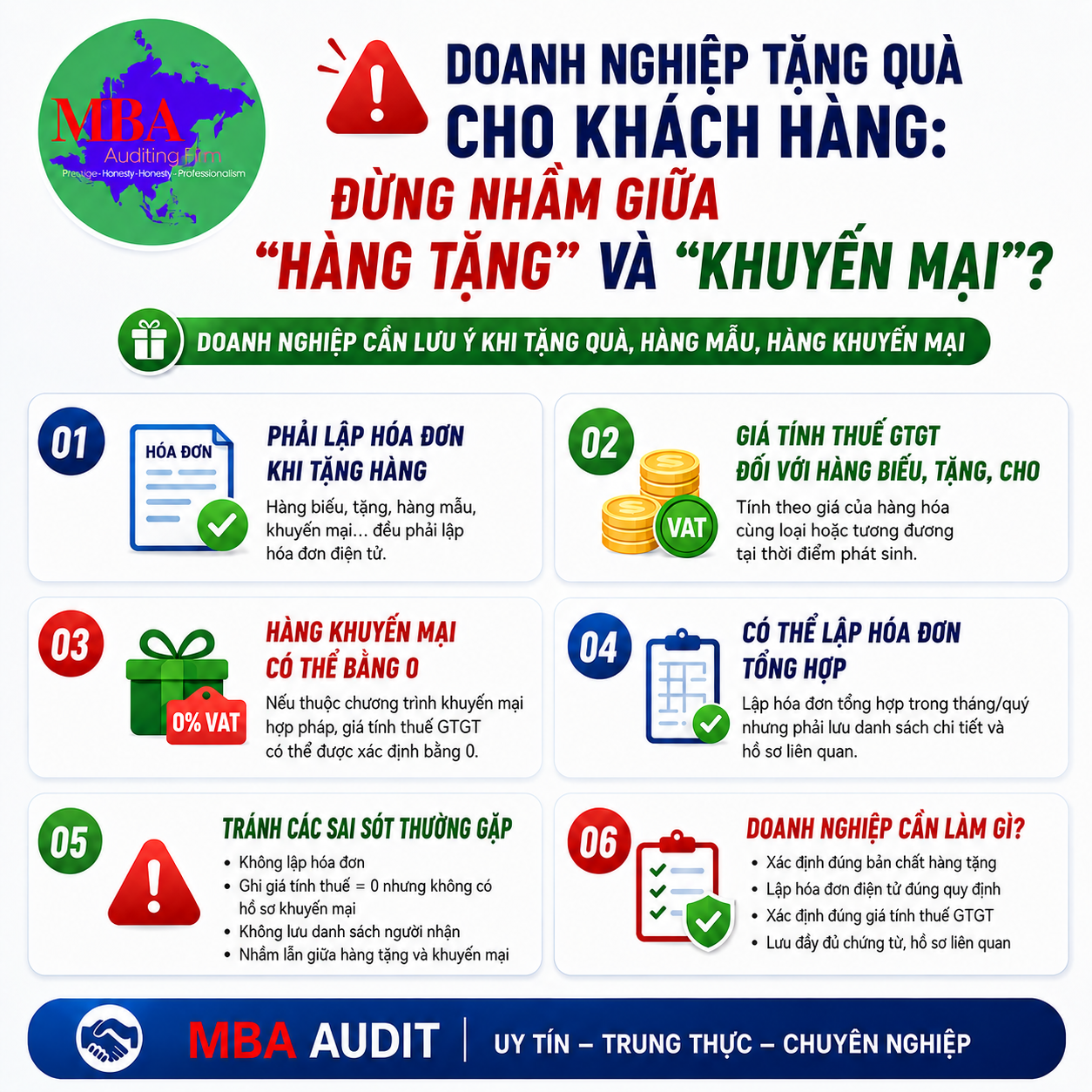
Output VAT on gifts and donations given free of
charge for production and business purposes is not excluded from deductible expenses.
10. Expenditures in violation of specialized laws
Clarifies which expenses are not deductible, such as:
overtime work exceeding legal limits, advertising of prohibited products,
or expenses exceeding limits prescribed by specialized laws.
11. Corporate Income Tax Rates
- 20%: General tax rate;
- 15%: Enterprises with annual revenue ≤ VND 3 billion;
- 17%: Enterprises with annual revenue of more than VND 3 billion up to VND 50 billion.
Note: The 15% and 17% rates do not apply to subsidiaries or related enterprises that do not meet the conditions.
12. Tax calculation method
Additional regulations on the Global Minimum Tax.
Enterprises with annual revenue≤ VND 3 billion
are allowed to pay Corporate Income Tax at a percentage rate on revenue
if expenses cannot be determined.
13. Capital transfer
Capital transfer contracts of VND 5 million or more
must be supported by non-cash payment documentation.
Otherwise, the tax authorities have the right to assess the transfer price.
14. Effective date
Applicable to the Corporate Income Tax period of 2025.
However, the provisions on non-cash payment
and capital transfer are effective from December 15, 2025.
- 📌 NEW PIT BRACKETS FROM 2026: FEWER BRACKETS – BUT NO REDUCTION IN ACCOUNTING RESPONSIBILITIES
- 🔍 ALL OVERTIME PAY WILL BE TAX-FREE FROM 2026 – RIGHT OR WRONG?
- 📢 NEW OFFICIAL LETTER – GUIDANCE ON THE PERSONAL INCOME TAX SCHEDULE APPLICABLE FROM 2026
- Decree 70/2025 on Invoices and Documents: Key Updates to Note
- 🚨 HOT UPDATE – DECREE NO. 144/2026/NĐ-CP ON VAT